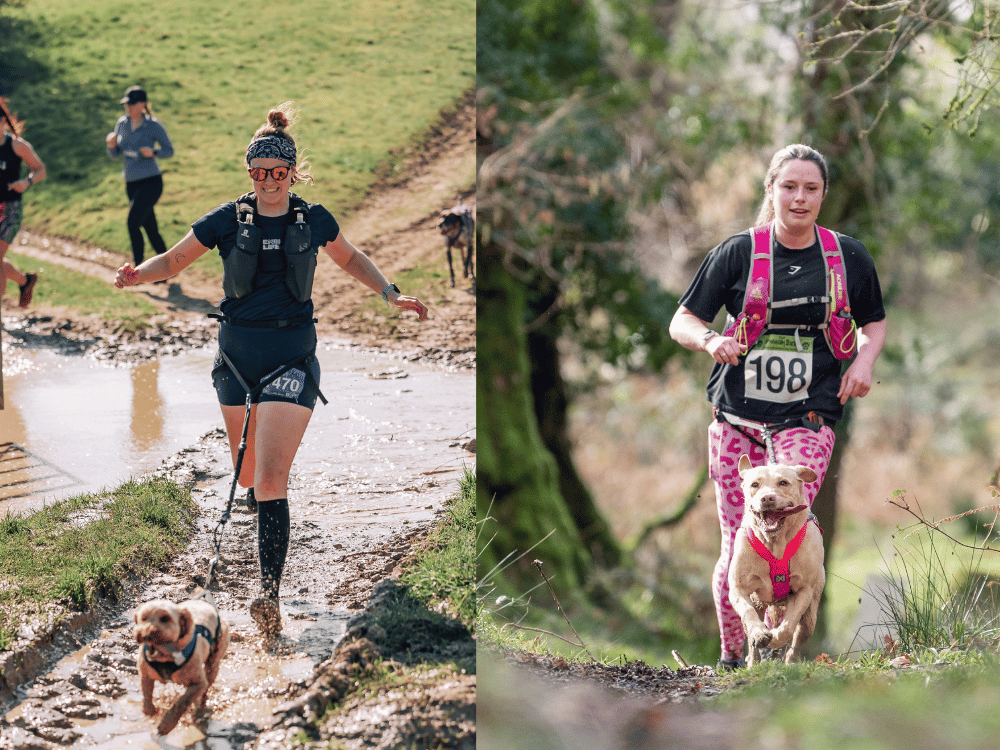
Receiving a diagnosis of Multiple Sclerosis (MS) can leave people wondering what the future holds. For many, the uncertainty can feel overwhelming, bringing concerns about mobility, fatigue and whether they’ll ever be able to enjoy the activities they love again.
In our recent episode of our Talk Canicross Podcast, we’re joined by two inspiring Canicross runners, Cat Everard and Louise Cowling, who are proving that a diagnosis doesn’t have to define what you’re capable of. They share their individual journeys into Canicross, the challenges of balancing an active lifestyle with MS, and the vital role their dogs and the Canicross community have played in building confidence, resilience and lasting friendships.
Whether you’re living with MS yourself, supporting someone who is, or simply looking for inspiration to get active with your dog, their stories show that Canicross is about much more than running. It’s about finding freedom, discovering a supportive community and focusing on what you can achieve, rather than what you can’t.
Different journeys, same determination
Although Cat and Louise both live with Multiple Sclerosis, the road to diagnosis was very different for each of them.
Louise spent years living with unexplained symptoms before finally receiving her diagnosis more than ten years ago. At the time, she admits her health wasn’t in a great place and exercise wasn’t a priority. Looking back now, she believes discovering Canicross became one of the biggest turning points in improving both her physical fitness and her mental wellbeing.
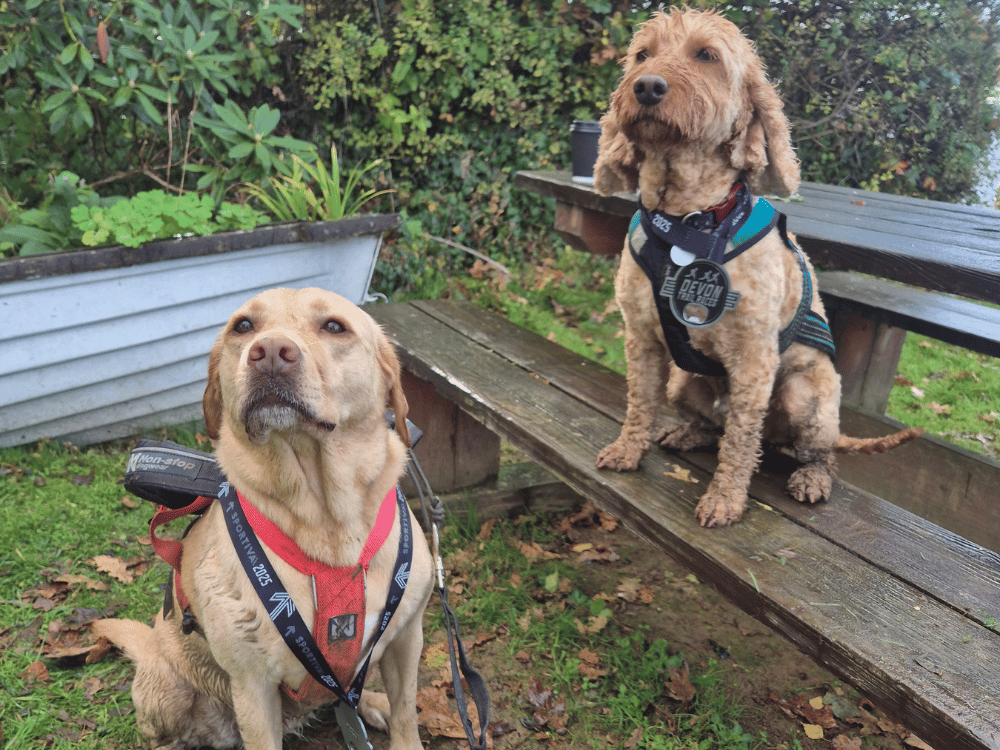
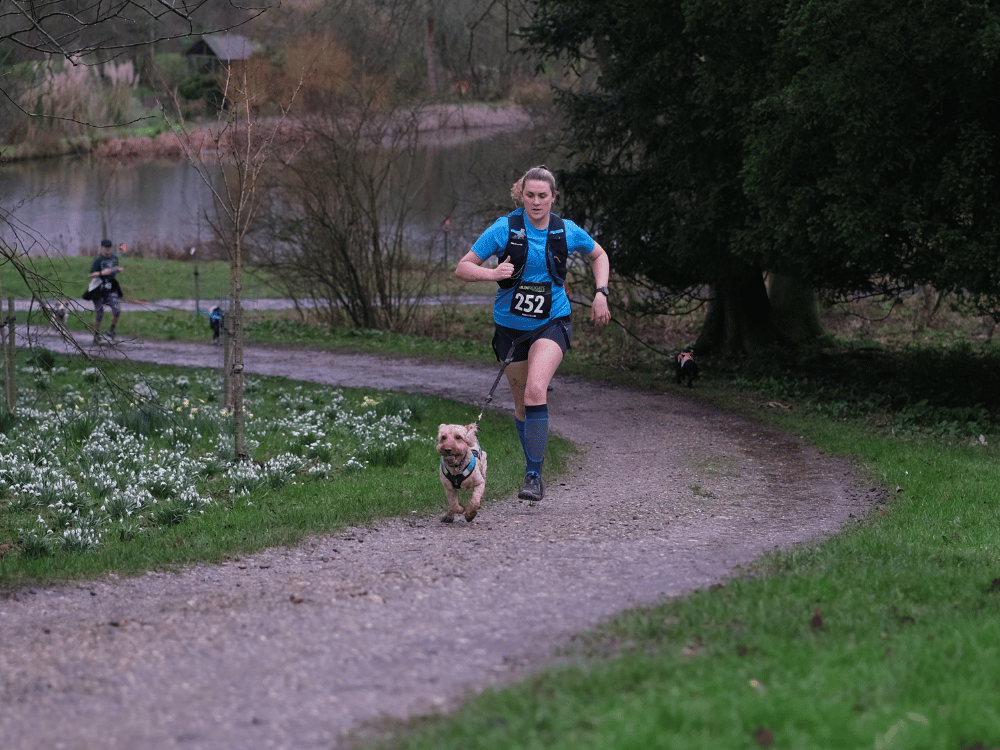
Cat’s diagnosis came much more suddenly. Already a keen Canicross runner with her Cockapoo, Stanley, she began noticing she was tripping more often during runs. Initially she blamed herself, assuming she’d neglected her strength training. It wasn’t until she experienced severe vision problems, eventually losing sight temporarily in one eye, that she was fast-tracked for tests which confirmed she had MS.
Despite their different experiences, both women reached the same conclusion: staying active became one of the most important ways of managing life with Multiple Sclerosis.
Discovering Canicross
For Louise, everything changed when a friend encouraged her to join a DogFit Couch to 5K Canicross course with DogFit Trainer at the time, Lara. Recovering from a relapse, she wasn’t convinced she’d even be able to complete the programme, but decided to give it a try anyway.
That decision transformed her life.
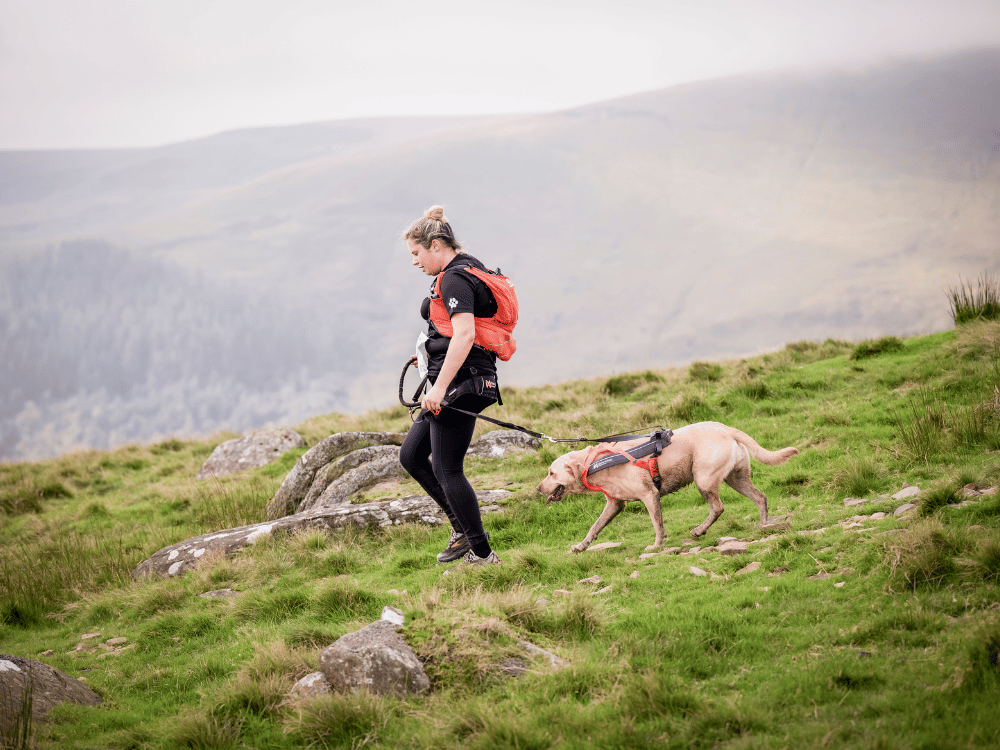
Running with her Labrador, Maya, gave her a renewed sense of confidence and achievement. Instead of focusing on everything MS had taken away, she began to focus on everything she was still capable of doing.
Cat’s journey was slightly different, as she’d already been Canicrossing for several years before her diagnosis. Rather than stepping away from the sport she loved, she adapted how she trained by introducing strength work, balance exercises and cross-body movements to help improve coordination and reduce falls.
As she explains in the podcast, her mindset shifted from asking, “Can I still do this?” to asking a much more positive question: “How can I keep doing what I love?”
Learning to manage MS while staying active
One of the biggest challenges of living with Multiple Sclerosis is fatigue, and both Cat and Louise explain that it’s very different from the normal tiredness people experience after exercise.
MS fatigue can feel as though someone has “taken the batteries out of your back”, leaving your legs heavy and making even simple tasks feel exhausting. What makes it even harder is that it isn’t always immediate. A hard run or busy weekend might feel manageable at the time, only for symptoms to flare up a day or two later.
Over the years they’ve both learned that managing MS isn’t about stopping exercise – it’s about learning where the line is. Planning recovery days, balancing busy work schedules and accepting that rest is part of training has allowed them to keep doing what they love while looking after their health.
Their advice is simple: exercise isn’t the enemy. Understanding your own body, pacing yourself and allowing time to recover are just as important as the training itself.
The motivation waiting at the front door
If there’s one thing that helps both women get outside on the difficult days, it’s their dogs.
Stanley still waits excitedly every morning, ready for his next adventure, while Maya seems to instinctively know when Louise isn’t feeling her best and naturally adjusts her pace. Dogs don’t care how fast you run, whether you’re having a bad day or if you have to stop and walk. They’re simply happy to be with you.
That unconditional companionship becomes even more important when symptoms make life difficult. On days when fatigue or dizziness keep them at home, both women describe the comfort their dogs provide simply by being there. Whether they’re out on the trails or curled up together on the sofa, that bond offers support in a way that’s difficult to put into words.
From Couch to 5K to Ultra Marathon
Louise’s Canicross journey shows just how much can change with patience and determination.
After completing her DogFit Couch to 5K, she progressed to 10K races, then a half-marathon, before eventually taking on an ultra-marathon through the Welsh mountains with Maya. Just a few years earlier she would never have believed that would be possible.
Cat has achieved some remarkable milestones too. Determined not to let MS define her, she completed a demanding 30-mile run along the Jurassic Coast not long after her diagnosis. More recently, she celebrated Stanley’s tenth birthday by completing ten 10K races together – a fitting way to mark more than a decade of adventures with her faithful running partner.
The strength of the Canicross community
Another theme running throughout the podcast is the incredible sense of community that Canicross creates.
Cat and Louise first connected through Instagram after Louise heard about Cat from DogFit trainer Lara. Although they lived in different parts of the country, they eventually met at a Canicross race, where both they and their dogs instantly hit it off.
They both describe the Canicross community as welcoming, supportive and completely free of judgement. Whether you’re taking your first steps on a Couch to 5K programme or training for an ultra marathon, there’s an immediate sense of belonging because everyone shares the same passion – running with their dogs.
For both women, those shared experiences have grown into genuine friendships that extend well beyond the trails.
Advice for anyone living with MS
For anyone living with Multiple Sclerosis and wondering whether Canicross might be for them, Cat and Louise offer some simple but valuable advice.
Start where you are and don’t worry about pace or distance. Listen to your body and learn what triggers your symptoms, remembering that recovery is just as important as exercise itself. Joining a local DogFit group can also make a huge difference, providing encouragement, practical advice and the motivation that comes from running alongside like-minded people.
Above all, don’t focus on what MS might stop you doing. Focus on what you’re still capable of achieving.

More than a sport
Listening to Cat and Louise, it’s clear that Canicross has become far more than simply running with their dogs. It’s helped them rebuild confidence after diagnosis, improve both their physical and mental wellbeing, and form friendships that continue to support them through life’s challenges.
Most importantly, it has reminded them that while MS may be part of their lives, it doesn’t define who they are. Their stories are a powerful reminder that with sensible training, good support and the unconditional companionship of a dog, it’s possible to keep challenging yourself and enjoying an active, fulfilling life.
If you’re thinking about starting Canicross, DogFit offers beginner-friendly equipment, expert advice and a nationwide network of qualified Trainers who can help you and your dog get started safely.
Useful MS support organisations
If you’ve recently been diagnosed with Multiple Sclerosis, or you’re supporting someone who has, these organisations provide trusted information, practical advice and dedicated support.
Cat and Louise would particularly like to mention the ones below:
You can also watch our full podcast here, or search for Talk Canicross on your favourite podcast channel.
